Scrapbook item


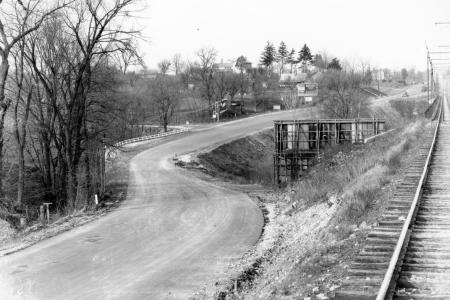
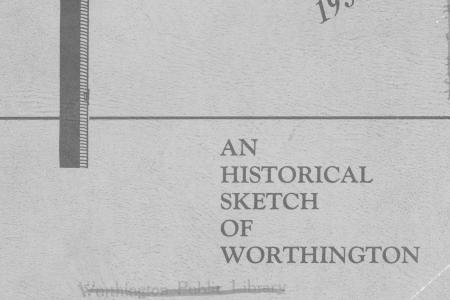
It’s hard to imagine while navigating High Street at rush hour, but 100 years ago this road was not paved. As the 1953 pamphlet An Historical Sketch of Worthington explains, High Street was a mud road connecting Worthington to Columbus until about 1840. That year, a corduroy road was built, consisting of branches and small tree trunks laid crosswise across the road. The corduroy road was replaced by a plank road in 1850 and a gravel road in 1875. It wasn’t until 1921 that this main route to Columbus was paved.
Another busy street in Worthington, Dublin-Granville Road, was once so sleepy that children sledded down it in the winter. Its transformation also began in the 1920s. As an article in the June 24, 1926 Worthington News reports, "This historic old Post Road—Granville Road, as it is known in Franklin County—was taken into the state highway system in 1925, with the thought that through traffic originating on the National Road could use it to advantage from Jacksontown on the east to Springfield on the west, and relieve congestion on the National Road between those points."
In addition to cars, Worthington’s residents once had the option to take the interurban to downtown Columbus. In the book Around Worthington, Robert McCormick writes, "Electric street railway cars arrived from Clintonville and tuned around at the Public Square beginning in 1893. The track down the middle of High Street changed Worthington from a market town for the surrounding farmers into a metropolitan suburb, People could now live in Worthington and commute to work in Columbus. A decade later the tracks were extended, offering interurban trains from Columbus through Worthington to Delaware and Marion." The Columbus, Delaware and Marion Interurban went out of business in 1933, with bus service replacing the interurban transit to downtown Columbus.
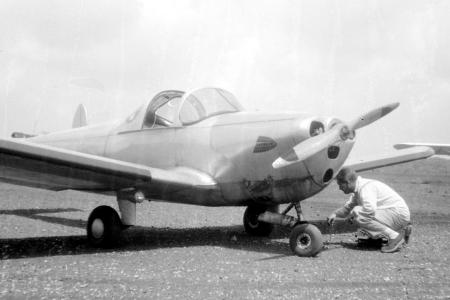
Other options for getting around have included bicycles, horses, motorcycles, airplanes and, of course, walking. Peruse the collection below to learn more about transportation through Worthington’s history.