Scrapbook item

In celebration of Black History Month, Worthington Memory features the contributions of Black residents to the community as teachers, veterans, business owners, visionaries and more.
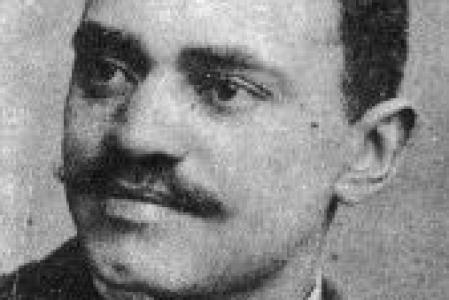
Charles Kiner was the first African-American to hold public office in Worthington, when he was appointed town marshal in 1891. According to an 1860 ordinance, the town marshal was the village's primary law enforcement official, who oversaw a deputy and was appointed to a term of two years. Kiner was also instrumental in founding the St. John African Methodist Episcopal Church in Worthington.
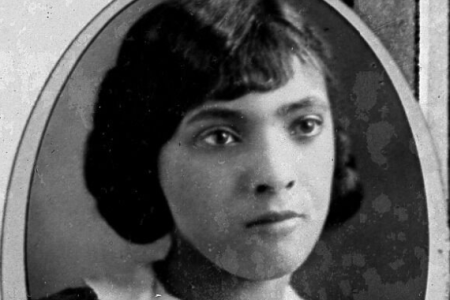
When women achieved suffrage in 1920, Maude Mabra was the first woman in Worthington to vote. She arrived at the polls at 5 am to cast her ballot for Warren G. Harding. Mabra worked as a cook at the Worthington Inn, and her husband, Keary Mabra, worked as a barber.
Squire Todd owned a successful moving company in Worthington, the Worthington Feed and Transfer Company. It operated from 1914 through 1934, when the Great Depression forced it out of business. Secretary for the company, Stacy Marie Calloway, was the daughter of John Kendall and Sarah Lee. The Lee family lived in the Worthington and Linworth area throughout the 1910s and '20s, and several of the Lee children attended Worthington schools.
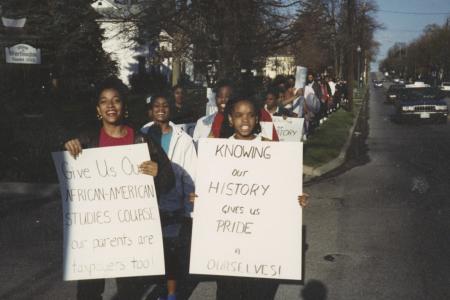
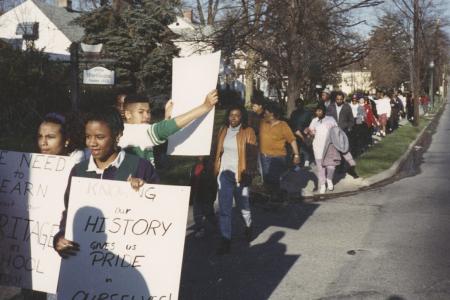
Worthington's schools have always been open to Black children, but the curriculum did not always reflect the diversity of its students. Juanita Jones wrote about her experiences attending school in the 1930s and '40s in "Black Pioneers in Education," a booklet published by the St. John AME Church:
"In thinking back to the period of time this Article refers to there was the same push for all students to learn the three R's, but for the black student the history or social studies class seemed to be barely related to him. The text and classroom discussion mentioned his people only in connection with the slave trade, slavery in the South, the Reconstruction Period, or in 'Uncle Tom's Cabin.' There was very slight mention of Tuskegee Institute and George Washington Carver. In the literature books there were no compositions by black writers. If the teacher happened to read Huckleberry Finn to the class, you would hear some of the antics of his black friend. A few Negro spirituals were sung in music classes. It was almost impossible to get reference material or compositions by any outstanding black musician or writers.
"Even in the nineteen-fifties, you could find only two books that were written by or about the black man in the Worthington Public Library; they were the collection of poems by Paul Lawrence Dunbar and a small book of brief character sketches of Carver, Booker T. Washington, Harriet Tubman, Mary McLeod Bethune, and Frederick Douglass."
Worthington Schools hired its first Black teachers in the early 1970s, including Ethel Harris (née Nichols) and Lillian Macer, who both taught at Worthington High School. Harold Jones, who served as a custodian at Wilson Hill Elementary School, was the founder of the Worthington Human Relations Council, a citizens group that from 1963 to 1990 fought for racial equality in housing, schooling and employment in Worthington.
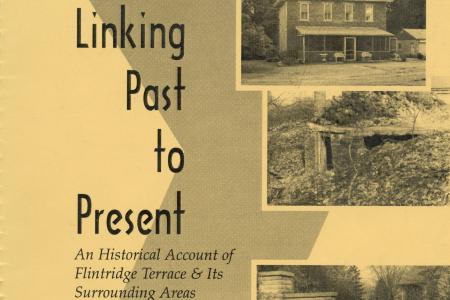
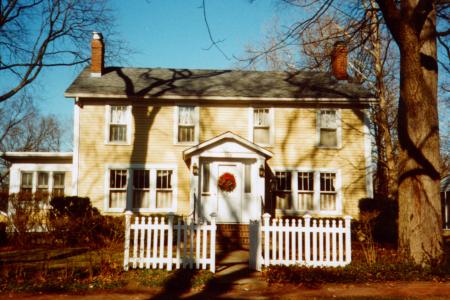
Robert and Vera Johnson planned and developed Flintridge Terrace, a community for Black homebuyers, in response to segregation in housing. Neighborhoods in Worthington such as Colonial Hills, Medick Estates and Riverlea were planned with restrictive covenants that limited the sale and occupation of homes to white residents.
Chief William (Bill) Fields was the first Black firefighter hired in Worthington. He volunteered with the Sharon Township Fire Department until 1978, when he was officially hired. He went on to win Firefighter of the Year in 1985 and was promoted to Battalion Chief in 2000. In 2009, he and three other Worthington firefighters received the Citizens’ Distinguished Service Award from the Columbus Division of Fire for rescuing victims trapped after an automobile accident.
These and many other stories are featured below—read on to learn more about the achievements and contributions of Black residents to Worthington’s history.